

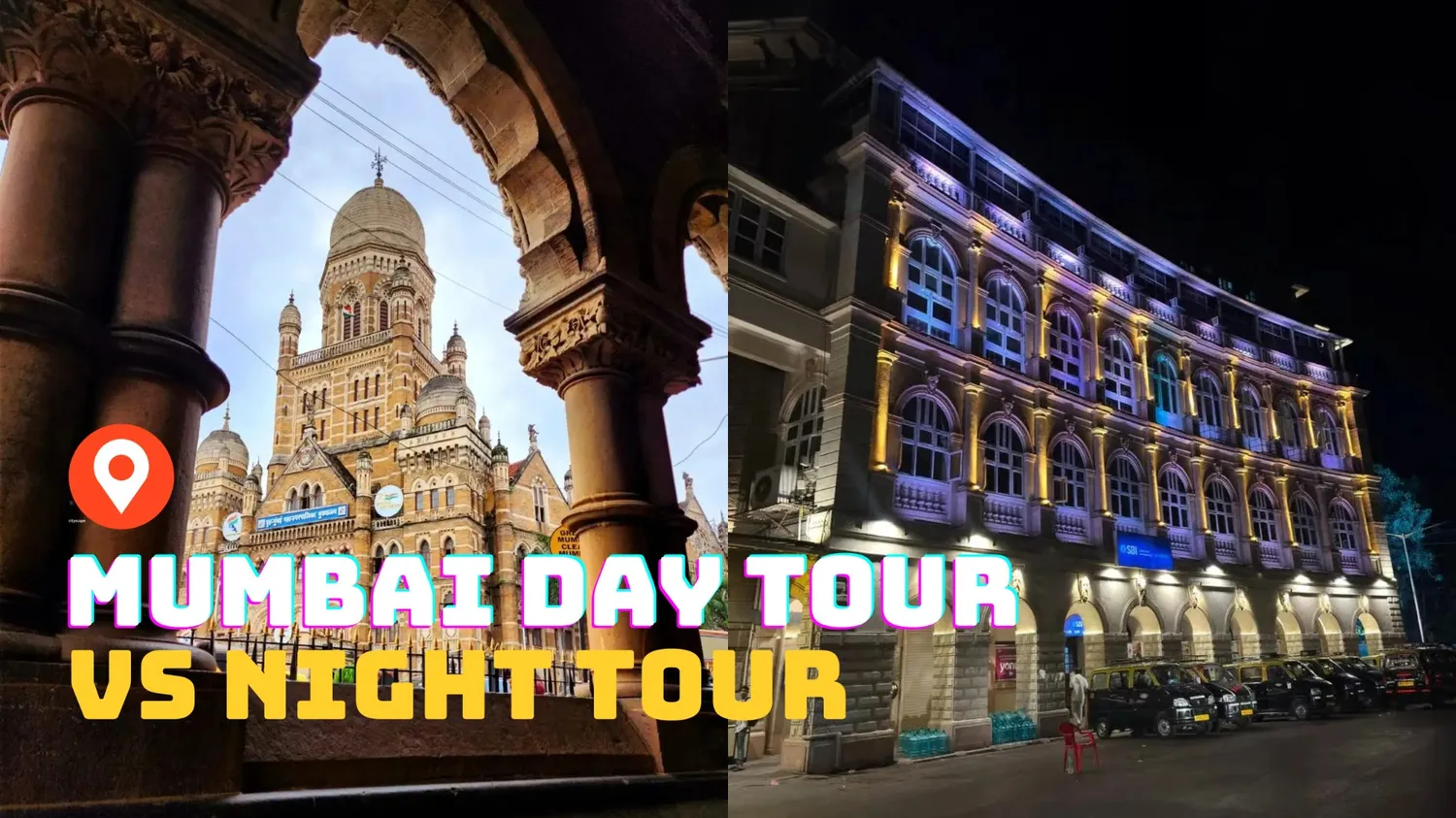
The moment you step into Mumbai, you realize that this city has many faces, countless stories, and different colours. Just like time keeps moving, Mumbai also keeps changing its colours, almost like a chameleon.
If you see Mumbai early in the morning, you’ll find it calm and peacefully beginning a new day. But after 8 AM, the same city looks completely different. You’ll see people rushing everywhere, running to work, and busy with their daily lives.
During the daytime, sightseeing is a lot of fun, but at the same time, you’ll also experience the heat. Some places will give you memories and excitement that you’ll remember for the rest of your life.
Now, if you see the same Mumbai at night, everything changes again. The city feels peaceful and calm. The lights come alive, the streets shine brightly, and the glowing skyline pulls you into the beauty and energy of Mumbai in a completely different way.
If you’re visiting Mumbai for the first time, one question will definitely come to your mind :
Which version of Mumbai do you want to meet first?
To help you answer that question, we’ve shared our experience through our tours. By the end of this blog, you’ll clearly understand which tour suits your interests and travel style the best.
What Is a Mumbai Day Tour?
A Mumbai Day Tour simply means experiencing the city while it’s awake, active, and full of life. In simple words, a day tour is all about exploring Mumbai while the sun is above your head and capturing the beautiful sights that are only visible during daylight.
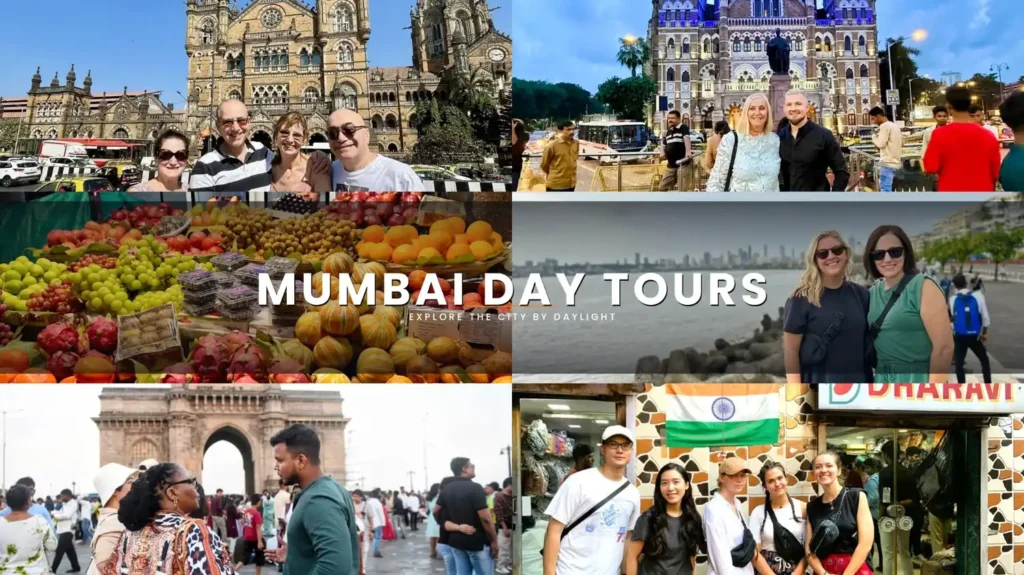
Some of the best places to visit on a Mumbai Day Tour include Chhatrapati Shivaji Maharaj Terminus, the Gateway of India, Crawford Market, Marine Drive, and the Dadar Flower Market. If you also want to understand Mumbai’s slum communities, then the Dharavi Slum Tour and the Dhobi Ghat (Mahalaxmi) Tour can also be experienced during the daytime.
The natural beauty that can be seen during the day, the intricate carvings on historical monuments, and the birds and animals that are active in the morning- these are all things that are very difficult to experience at night. Similarly, understanding the perfect coordination of Mumbai’s famous Dabbawalas is only possible during the daytime. That is why our Mumbai Dabbawala Tour has become one of our most popular tours.
Rather than seeing Mumbai’s poverty, many travellers love exploring its wealth, architecture, and heritage. That is exactly why places like Malabar Hill, Kanheri Caves, the Gateway of India, the Victorian Gothic and Art Deco buildings, and Mumbai’s museums are among the city’s most famous daytime attractions.
What Is a Mumbai Night Tour?
A Mumbai Night Tour can simply be described as experiencing the city away from the warm sunlight and under the peaceful shade of the moon, where Mumbai shines in its beautiful lights.
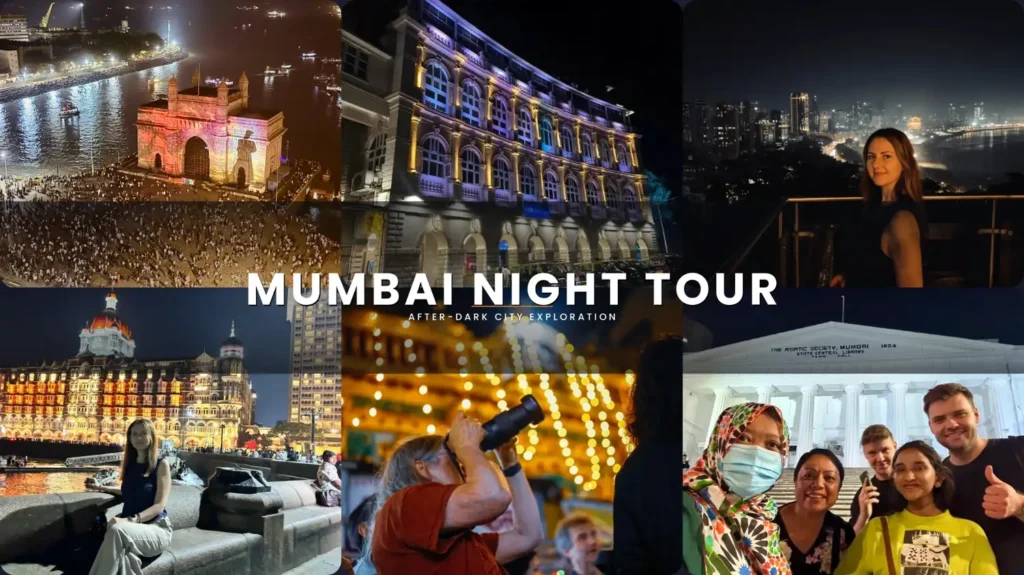
The reason behind this is very simple. By night, most Mumbaikars have finished their work and returned home. As a result, the roads become much calmer, traffic is much lighter, and the overall atmosphere is far more peaceful than during the day.
It is something that Mumbaikars themselves love to do. After finishing work, many people head to Marine Drive (Queen’s Necklace) to watch the sunset, or visit the city’s famous food streets (Khavu Gully) and Girgaon Chowpatty to enjoy delicious local food by the sea.
This is the perfect time for people, especially foreign travellers, to step out and experience Mumbai’s famous food culture. That is exactly why we also enjoy conducting our Mumbai Food Tour and Mumbai Night Tour, because the city comes alive in a completely different way after dark.
Mumbai Day Tour vs Night Tour: Quick Comparison
| Aspect | Mumbai by Day | Mumbai by Night |
|---|---|---|
| What you see | Markets, working neighbourhoods, museums, and landmarks in full detail under natural light | The same landmarks lit up, plus skyline views and coastline lights that don’t exist during the day. |
| Weather | Warmer and often humid, especially between March and June | Noticeably cooler and more comfortable for walking |
| Crowds | Streets, markets, and monuments are at their busiest, especially between late morning and early evening. | Roads and tourist spots thin out considerably, making it easier to walk around and take photos. |
| Food | Street food stalls run all day, but breakfast spots, lunch thalis, and daytime snacks like vada pav and misal pav are easiest to find | This is when Mumbai’s street food scene actually peaks, with stalls around Mohammed Ali Road and Colaba getting busiest after sunset. |
| Sounds and atmosphere | Loud and constant: traffic, vendors calling out, trains, the general hum of a city at full speed | Quieter and slower, with the city’s energy shifting from work to leisure |
| Traffic | Heavy through most of the day, particularly during morning and evening office hours | Noticeably lighter, so travel between places takes less time |
| Photography | Best for detail shots of architecture, markets, and street life in natural light | Best for skyline shots, reflections, and lit-up monuments against a dark sky. |
| Local life on display | Fish markets, flower markets, offices, and daily commerce in full swing | Restaurants, promenades, and public spaces like Marine Drive fill up with locals unwinding after work |
| Cost of things | Standard daytime pricing across food, transport, and entry points | Largely the same, though some food stalls and areas see a slight evening rush in pricing during peak hours |
| Overall mood | Practical and busy, this is Mumbai getting things done | Relaxed and scenic, this is Mumbai catching its breath |
Which Tour Is Better for First-Time Visitors?
If this is your first trip to Mumbai, book a day tour first from Cityscape Mumbai Tours. Most of what makes the city worth visiting- its markets, its museums, its working neighbourhoods like Dharavi and Dhobi Ghat- only operates during daylight hours.
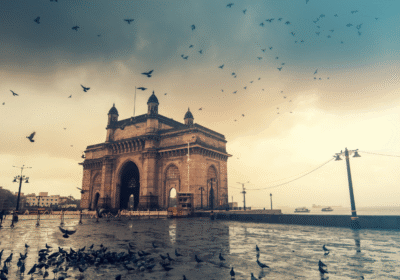
A night tour is a wonderful add-on, but it is not built to replace the context a day tour gives you. Once you have seen the Gateway of India in the afternoon crowd, seeing it again lit up at night hits differently, and you actually understand what you are looking at.
That said, if you are arriving late in the evening on your first day and want to make use of those first few hours before checking into sightseeing properly, starting with something like the night tour is a reasonable way to ease into the city without wasting time.
Can You Do Both Tours?
Yes, many travellers do. A night tour usually runs about three hours, so it fits easily into the same day as a half-day city tour or an early morning market visit without feeling rushed.
A common approach is covering landmarks in the morning, then switching to a slower, cooler pace once the sun goes down. If you’re short on time, combining both into one day works well. If not, spacing them across two days feels more relaxed.
Tips for Choosing the Right Tour
1. Be honest about how many days you have. Packing both a full day and a night outing into one day often leaves you tired rather than enjoying either properly. Pick one focus per day if you can.
2. Think about your walking tolerance too. Daytime areas like markets and heritage lanes involve more walking and uneven ground, while evenings are naturally cooler and slower paced, which matters if you’re travelling with kids or elderly parents.
3. Go with what actually interests you. Markets, trades, and everyday city life only happen during the day. Atmosphere and skyline views are a night thing.
4. Mumbai’s heat and humidity peak during the day, especially February to June, so heavier walking is often more comfortable early morning or evening. And a place that felt overwhelming at noon can feel completely different a few hours later, worth a second look before ruling it out.
5. If you’re planning to take a walking tour between June and September, it may be more challenging compared to a private vehicle tour. This is because the Indian monsoon can sometimes disrupt the tour experience due to heavy rainfall.
Frequently Asked Questions
Is it worth doing a night tour if I already did a day tour?
Yes. Landmarks like the Gateway of India and Marine Drive genuinely look and feel different at night, and most travellers who do both say the night version ends up being the more memorable one, even after already seeing the same spots during the day.
How many hours should I set aside for a day tour and a night tour together?
A half-day city tour runs four hours and the night tour runs three, so together that is roughly seven hours across a single day, which is manageable without feeling rushed if you start reasonably early.
Are night tours safe for solo travellers?
Yes. The Mumbai night tour runs as a private guided experience with hotel pickup, and areas like Marine Drive, Colaba, and Malabar Hill stay busy and well lit well into the evening.
Which is cheaper, a day tour or a night tour?
It depends on which specific tour you compare. Walking tours like the Dharavi Slum Tour start under ₹1,000, while the night tour is ₹2,980 and the full day private tour is ₹4,000, so pricing really comes down to format and duration rather than simply day versus night.
Can I customise a day tour or night tour to skip certain stops?
Yes, most of these tours can be adjusted ahead of time based on your interests, so it is worth mentioning any preferences when you book.
Whichever you book first, the honest answer is that Mumbai rewards seeing both sides of it. The day shows you how the city works. The night shows you how it feels. Together, they give you the full picture most short visits miss entirely.

Very engaging
Interesting
Really helpful