

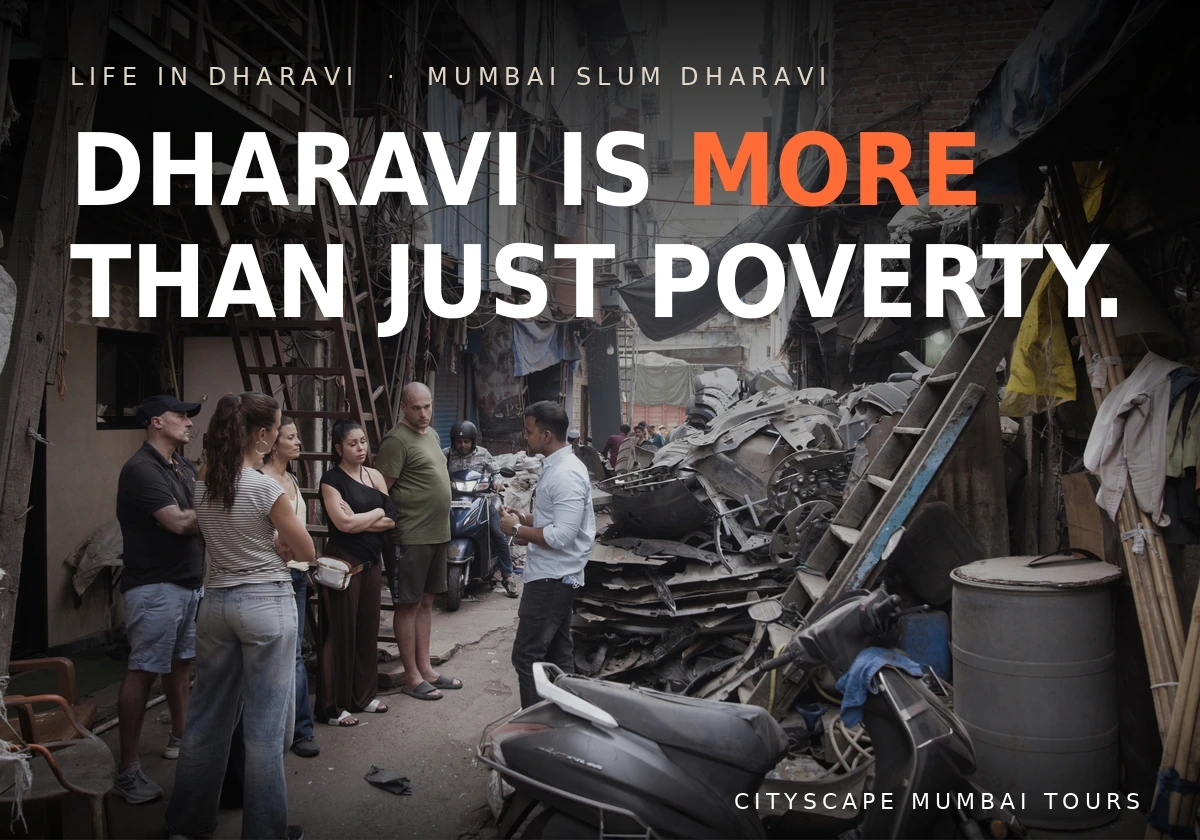
We have been working in this industry for a very long time, and we have spent at least 6 years or more guiding tourists in Dharavi. Today, when we searched online about life in Dharavi or Things in Dharavi, we realised that there is not a single blog that tells the real story of Dharavi. Everyone is focusing only on the poverty of the Mumbai slum Dharavi.
Because of this, we felt that somewhere someone should show what Dharavi Bombay really is, what you can see in the Dharavi slum area, and what you learn from it.
We could have kept the title of this blog as “What Will You See on Mumbai Slum Dharavi? Recycling, Leather, Pottery and More”
but we kept it as “What Will You See on Mumbai Slum Dharavi? Unity, Kindness, Hard Work and More” on purpose, because there is so much more in Dharavi than poverty.
What we want to say is that we also conduct slum tours, but in what we do, we focus on showing the unity, love, hard work and kindness that exist in Dharavi in Mumbai India. Come and see for yourself what you will actually get to see on a Dharavi slum tour.
So what will you actually see here? Let us walk you through it, stop by stop.
Chawls and Residential Lanes: How People Actually Live
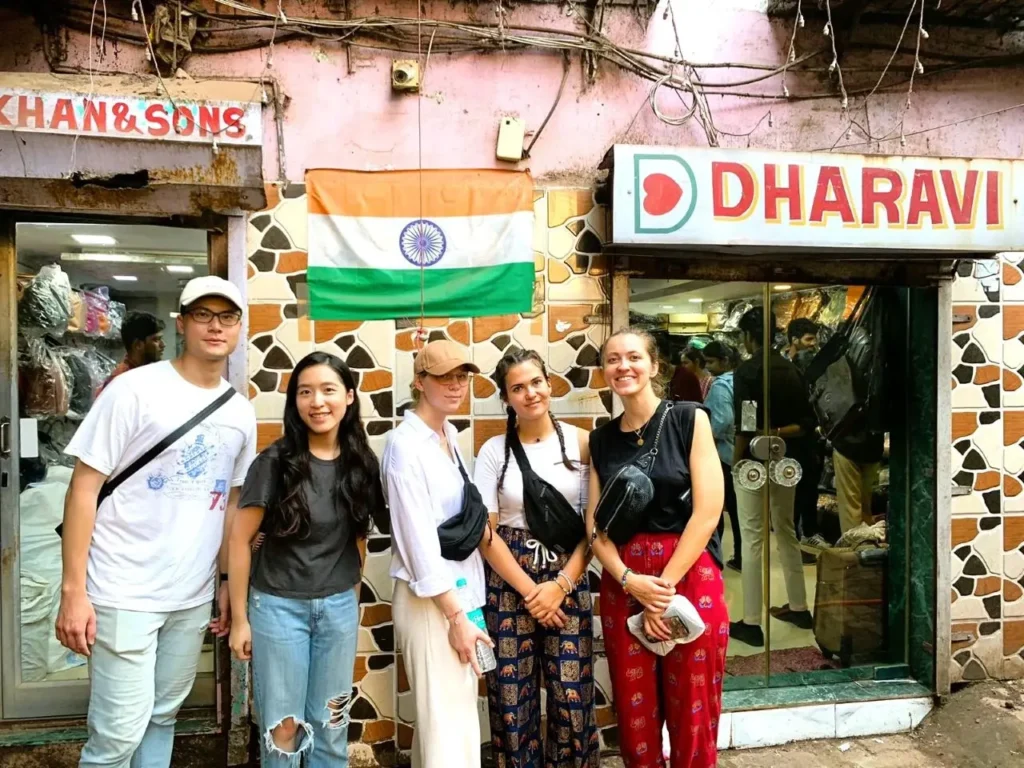
As soon as we visit Dharavi, we get to see the lanes where people live. A lot of people say that life in Dharavi means living in a “Zopadpatti”, which means a slum. But it is much more than that.
Every home is typically around 100 square feet and houses four or five people. Electricity runs through the day and night, but water comes for only about two hours daily.
What stays with most visitors is the sense of community. Hindus, Muslims, Sikhs, Buddhists and Christians live as neighbours here, sometimes with a temple, a mosque, a gurudwara and a church only a few steps apart. People of different religions and different regions live together so warmly, like one big family.
Many workers here come from villages across rural India. They put in 12 to 13 hours a day for around ₹200 to ₹300, and they send most of their earnings home to families they see only around harvest time. It is a reminder that every product made in the Dharavi slum area carries a human story behind it.
Plastic Recycling: Where the City’s Waste Gets a Second Life
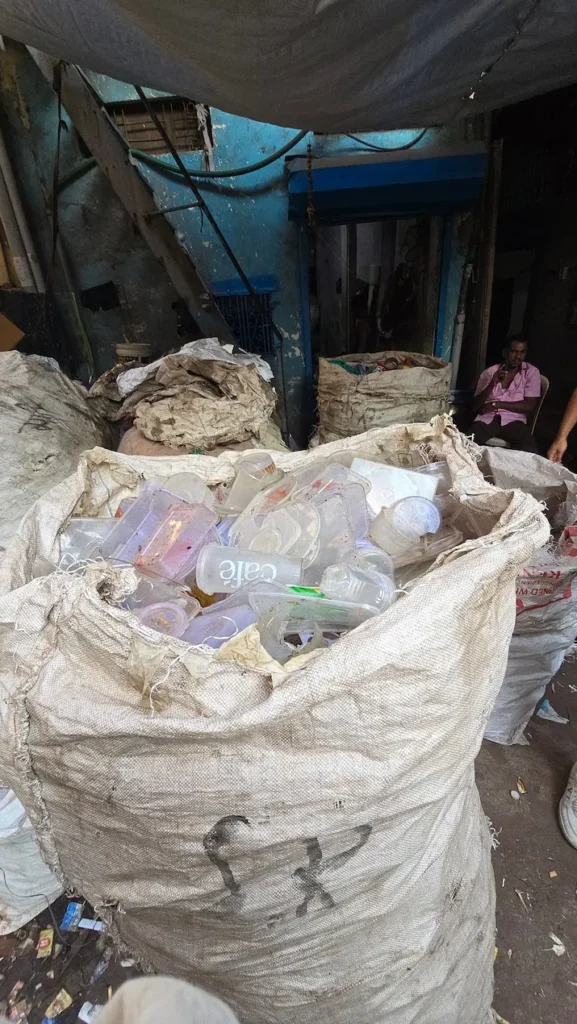
Picking up the plastic lying on the roads and turning it into an earning – this is how a person can earn on their own and also dispose of plastic neatly. This is something you get to learn from the Mumbai slum Dharavi.
Plastic is collected from streets, bins and industrial waste, and it all finds its way to Dharavi. In the recycling units, workers sort it by colour, shred it, wash it and then dry it on rooftops in the open sun. The cleaned material is sold back to manufacturers, who turn it into everyday things like chairs, buckets and stationery.
The scale is what surprises most visitors. Workers handle tonnes of plastic every day, and the material sells at just ₹40 to ₹60 per kilo. This is recycling done by hand, long before “circular economy” became a popular phrase.
Garment Factories: Stitching at Speed
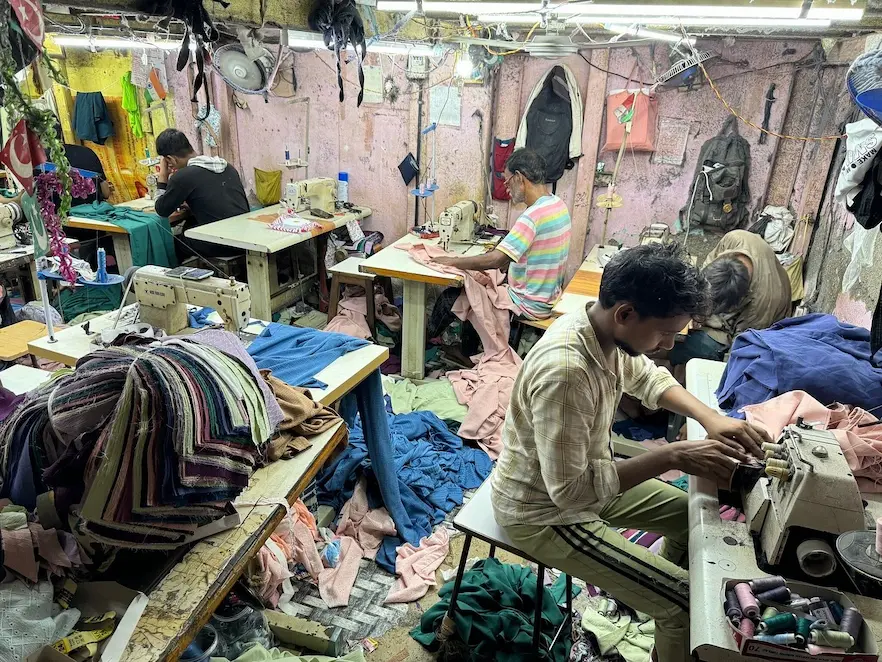
Dharavi has around 5,000 garment units, and each one produces about 500 to 600 pieces a day. Inside these small workshops you will see jeans, T shirts and track pants taking shape under skilled hands. The clothes are sold in markets across India, and some are exported to Africa and the Middle East.
It is one of the busiest parts of India’s informal textile industry, and it runs on pure craft and precision.
Soap Recycling: A Surprising Second Life for Hotel Soap
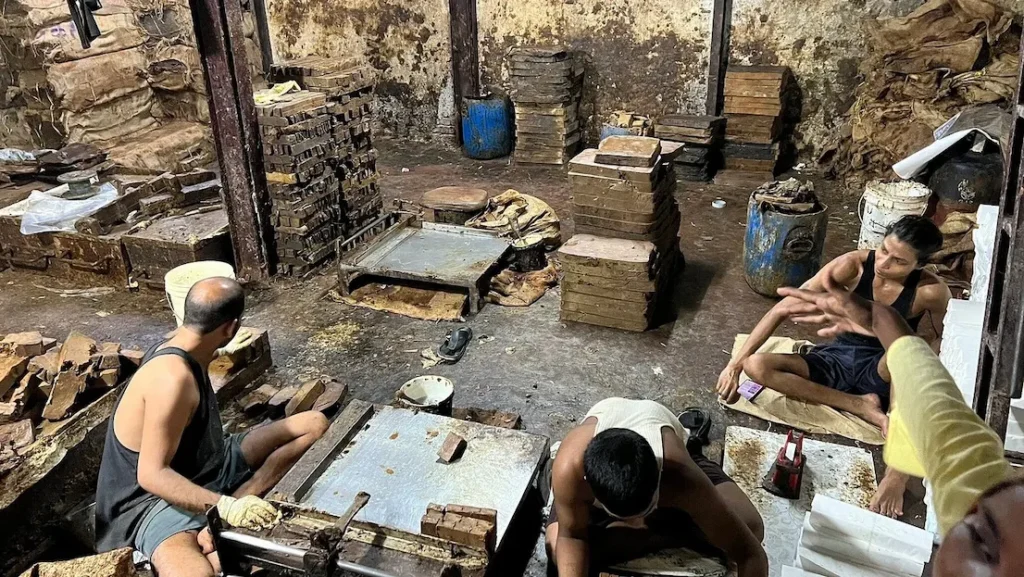
This is the stop that makes people pause. Used soap bars from Mumbai’s hotels end up here instead of in the landfill. Workers melt them down, blend them with cottonseed oil and other natural ingredients, and pour the mixture into moulds. Once set, the soap is cut into bars and sold as dishwashing soap in local shops.
It is a very simple idea, and it changes how you think about what “waste” really means, especially when you see it happening in Dharavi Bombay.
Kumbharwada: The Pottery Village
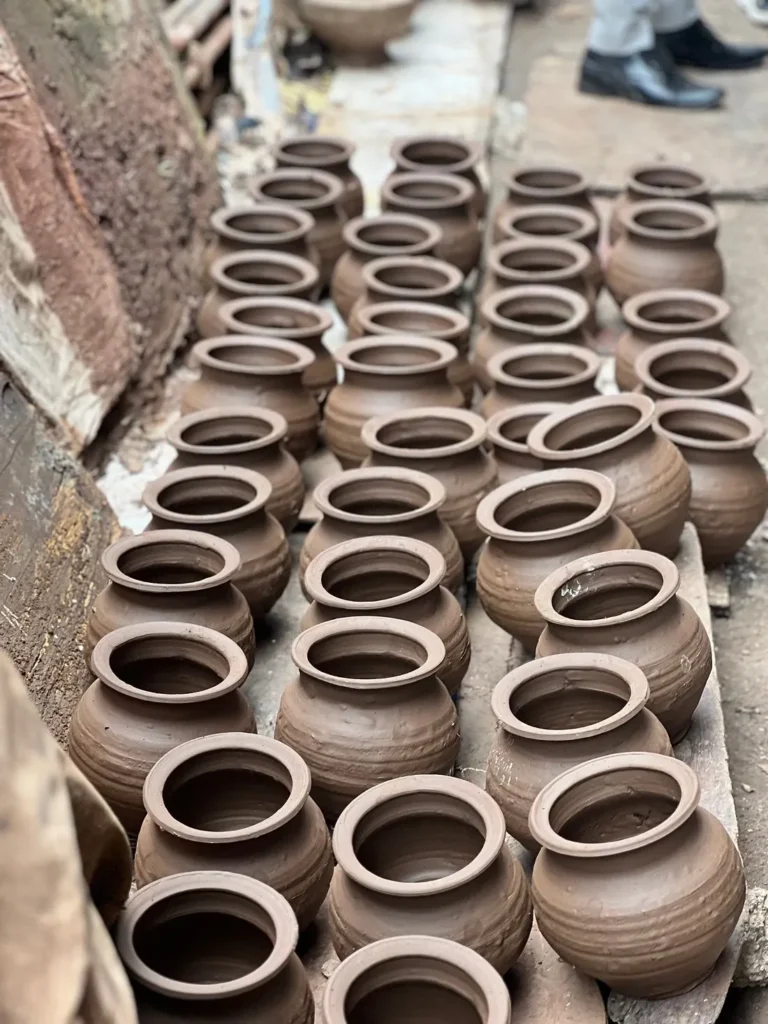
A “kumbhar” is a person who makes pots, lamps and many different things from clay, and the place where these families live is called a “wada”. So this is what Kumbharwada means.
Kumbharwada is one of the oldest neighbourhoods in Dharavi, and it is home to roughly 1,000 to 3,000 potter families. Clay comes in from Bhiwandi and soaks in large pits for two to three days until it turns soft. It is then shaped on wheels, mostly turned by hand, with electric wheels slowly entering the picture.
Every pottery unit here is a family business, so women work right alongside the men. The skills are passed down from one generation to the next, and the craft is still very much alive in the middle of a megacity.
This is their business, and their art is truly worth watching. Depending on your interest, you too can learn it and try making a pot yourself.
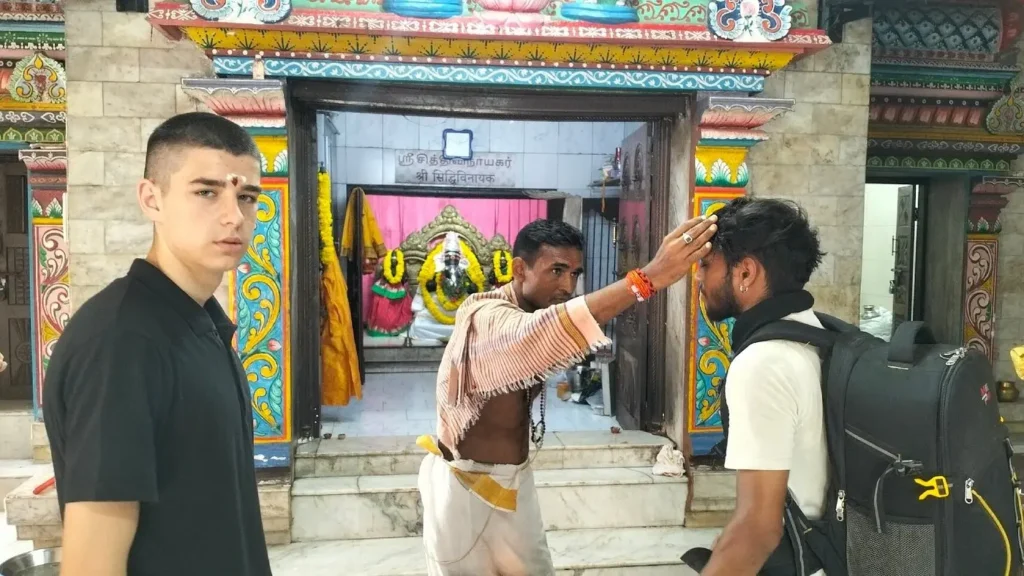
Honestly, there is so much more to see and learn in Dharavi in Mumbai than just this. The newness you find in every lane is the speciality here. The street food you see in every lane, the different games people play, the festivals, and everyone’s customs and traditions – it is a lot of fun to see all of it here.
Final Thoughts on Dharavi Bombay
Dharavi in Mumbai India is much more than the image most people carry with them. It is a place of recycling, leather, pottery, garments and soap, all made by hand and all packed into a few square kilometres. What the rest of the world throws away, Dharavi turns into raw material, and that is exactly why it is worth seeing with your own eyes.
Dharavi Is More Than Just Poverty.
What Our Guests Say on Google
Justin Ying
Local Guide
Subhan and Sandy were excellent guides. They live in Dharavi and showed me the manufacturing and residential districts in detail, as well as a glimpse into Dhobi Ghat. I would never have been able to navigate or understand these areas without their help. I highly recommend this tour and both of my guides!
Алексей Мищенко
Google reviewer
Спасибо большое Harshita за увлекательную экскурсию, 3 часа пролетело как одно мгновение. Рекомендую
Translated from Russian: Thank you very much Harshita for the fascinating tour, 3 hours flew by in an instant. I recommend it.
Sara E. Rodríguez Gómez
Local Guide
Chirag was my guide for the Dharavi and Dhobi Ghat tours, and it was such a unique experience. I got to see so many contrasts of Mumbai: the hardworking people who never seem to stop, kids playing cricket in the streets, the adventure of a crowded local train, warm smiles, deep looks, and the beautiful chaos of the city.
Chirag shared the kind of details only a local would know, and I couldn’t have asked for better company. He has great energy, is always open to helping, and made me feel safe the entire time. Would highly recommend touring with him.
David Broughton
Local Guide
Very last minute we arranged a tour of Dharwi Slum with Subhan as our guide – It was an amazing tour and insightful to the whole economy of this slum area of Mumbai and the different business that work there and conditions by someone who was born and brought up in this area. If your coming to Mumbai then this should be on your list of things to do
Reviews are shown exactly as our guests wrote them.
