

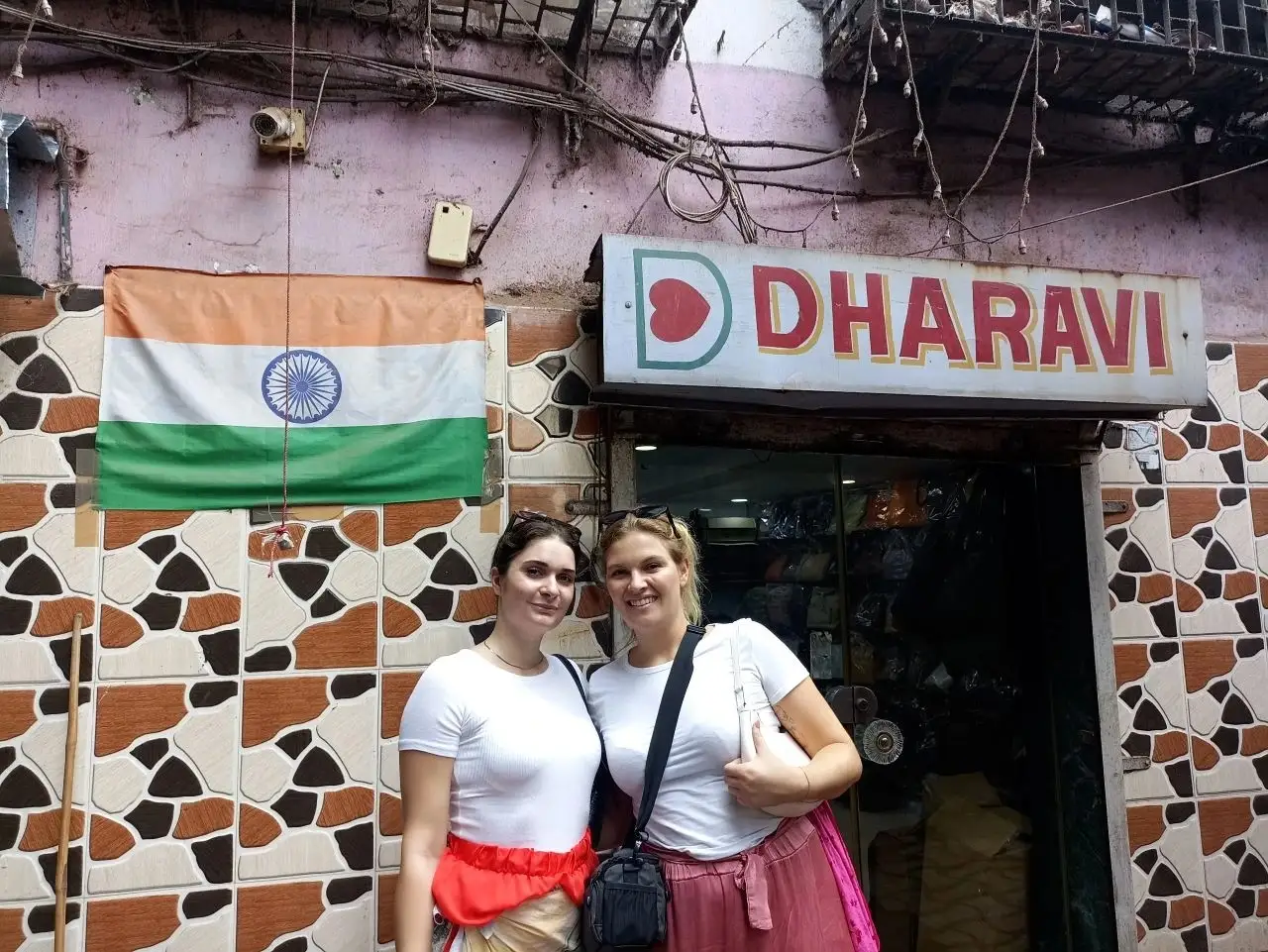
Whenever I tell people that I host a Dharavi slum tour in Mumbai.
I often get the same reaction: “Wait, people actually visit a Mumbai slum?” That is the first reaction I get!!
Sometimes the question comes from genuine curiosity. Sometimes it comes with discomfort. Honestly, I understand why, because I asked myself the very same question when I first entered the tourism industry.
My name is Chirag. I am 25 years old, and I have spent my entire life living in Dharavi, Mumbai. I now host tours through Cityscape Mumbai Tours, and long before I became a tour host, I was simply a local kid growing up in one of the most talked-about neighbourhoods in the world.
For most of my childhood, I did not think much about Dharavi being famous, it was simply home.
The narrow lanes, the sounds of workshops, the smell of fresh bread from local bakeries, the constant movement of people going to work, children playing cricket in small spaces, and neighbours who knew each other for generations, this was normal life for me.
As I grew older, I began to realize that the world had a very different image of Dharavi.
Most people knew it from documentaries, newspaper headlines, or films. They saw words like “Asia’s largest slum”, “overcrowding” and “poverty”.
While those challenges certainly exist, I always felt that the picture being shown to the world was incomplete. The slum that I knew was far more complex.
Growing Up in Dharavi, Mumbai
Living in a slum teaches you something very early in life: people are incredibly resourceful. Space is limited, and opportunities are not always easy to find, yet every day I watched people create businesses, support families, and build livelihoods from almost nothing.
Many residents are first or second-generation migrants who arrived in Mumbai searching for opportunities. Some came from villages in Maharashtra, while others travelled from Uttar Pradesh, Bihar, Tamil Nadu, Gujarat, and many other parts of India.
Most arrived with very little. What they built over time is remarkable.
Today, the Dharavi area is home to thousands of small businesses and workshops. Walk through its lanes, and you will find leather manufacturing, garment production, pottery workshops, bakeries, recycling units, tailoring shops, and countless other industries.
Many visitors on a walking tour are surprised when they discover how much economic activity takes place within such a small area. The image they expected and the reality they experience are often completely different.
The First Time I Thought About Mumbai Dharavi Slum Tourism
When I first learned that tourists were visiting Dharavi, I was not sure how I felt about it. The term “slum tour” itself sounded uncomfortable.
Would people simply come to stare at poor communities? Would residents become attractions? Would visitors leave with the wrong impression?
These were genuine concerns, because nobody wants their home reduced to a stereotype or their community defined solely by its challenges.
However, after spending time understanding how responsible tours operate and speaking to travellers who had participated in them, I began to see another side of the story.
I realized that not all tours are the same. There is a huge difference between poverty tourism and educational tourism, one focuses on shock value, the other focuses on understanding.
What First-Time Visitors on a Dharavi Slum Tour in Mumbai Rarely Expect
One of the most fascinating things about hosting tours is seeing expectations change in real time.
Many guests arrive expecting sadness; instead, they find productivity.
They expect despair; instead, they find entrepreneurship.
They expect to see a community waiting for help; instead, they see a community creating opportunities.
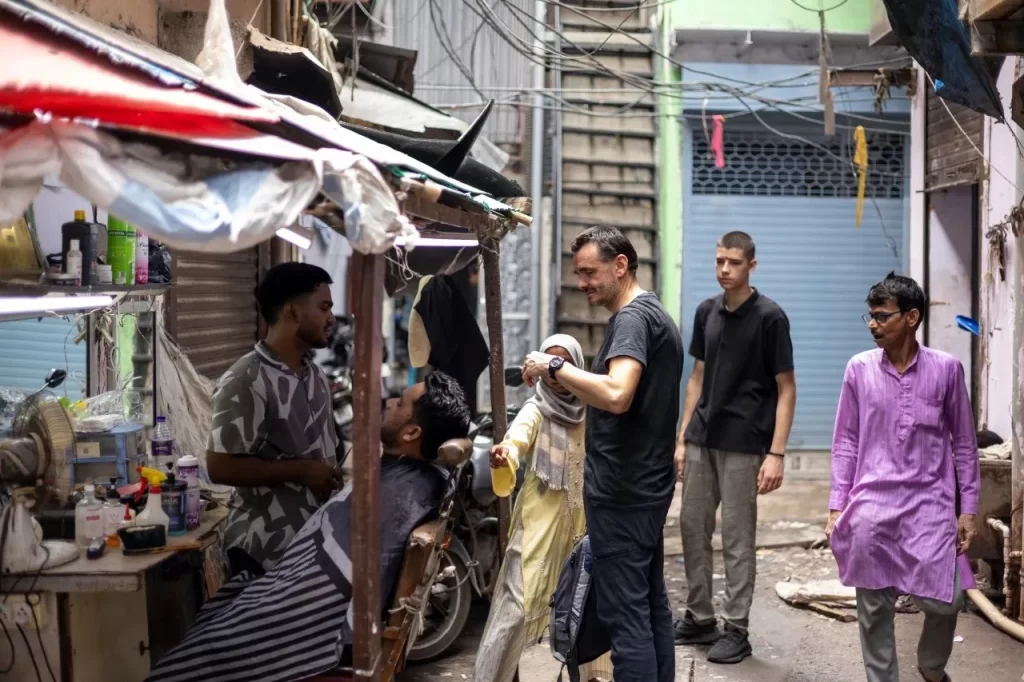
One of the most common comments I hear after a tour is, “This was not what I expected at all”, and I understand why. Media stories often focus on the challenges because challenges make headlines, but they rarely show the determination, innovation, and resilience that exist alongside those challenges.
Every day, thousands of people wake up before sunrise and work long hours to support their families. Many workers send a large portion of their income back to villages and hometowns where their loved ones live, and some only get to see their families once or twice a year.
Behind every workshop is a personal story, and behind every product is someone’s dream for a better future.
How Our Dharavi local Tour Is Conducted Responsibly
For me, respect is the most important part of any Dharavi local tour. People live here. This is not an open-air museum, it is a functioning community where families raise children, operate businesses, celebrate festivals, and go about their daily lives.
That is why I strongly believe local tours should be conducted responsibly.
Visitors should learn about the industries, the history, the culture, and the people behind the businesses. At the same time, residents deserve privacy and dignity. This is why we maintain a strict no-photography policy in residential areas.
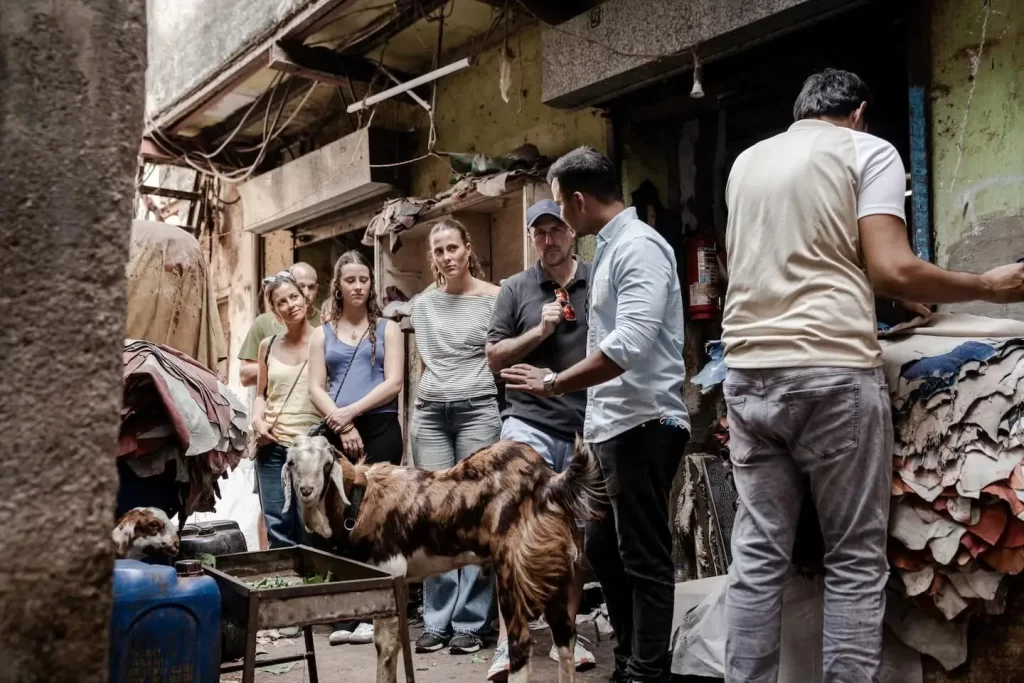
The goal is not to collect dramatic images , the goal is to create meaningful understanding. When visitors leave with knowledge rather than photographs, everyone benefits.
Is the Dharavi local slum tour in Mumbai Ethical?
Honest Answer from a Local
This is the question I am asked most often, and I believe the answer depends entirely on how the tour is conducted.
If people visit to look at poverty, then that is not ethical. If a guided tour treats residents like attractions, then that is not ethical either.
But if visitors come with curiosity, respect, and a genuine desire to learn, the experience can be incredibly valuable. Education creates empathy. Understanding breaks stereotypes. Meaningful conversations challenge assumptions.
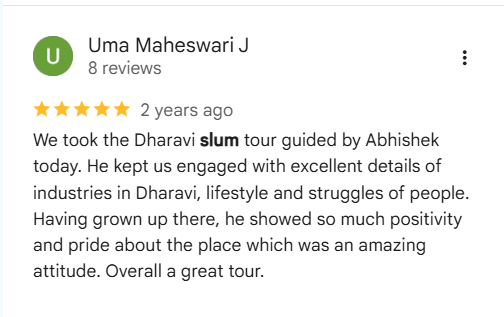
I have watched countless visitors leave the slum with a completely different perspective on Mumbai, urban life, and human resilience. That, in my opinion, is the true value of an educational Dharavi local tour.
The Story I Want Every Visitor to Remember
If visitors remember only one thing after their Dharavi slum tour in Mumbai, I hope it is this:
Indian slum is not defined by poverty; it is defined by people and their unity.
People who work hard, dream big, support their families, build businesses, and continue moving forward despite challenges.As someone who has lived here my entire life, that is the Dharavi I know. And that is the Dharavi I want the world to see.
If you are interested in exploring Dharavi through the eyes of someone who grew up here, you can book the Dharavi slum tour in Mumbai with a local guide here.
FAQ: Dharavi Local Tour Mumbai – Most Asked Questions
1. Is the Dharavi slum tour in Mumbai safe for tourists?
Yes, absolutely. The tour is led by local guides who know the area well. Dharavi is a residential and commercial community, not a dangerous place. Thousands of visitors complete the tour safely every year.
2. What will I see on a Dharavi local tour?
You will see leather workshops, pottery units, garment factories, recycling centres, local bakeries, schools, and the daily life of thousands of residents. It is far more vibrant and industrious than most people expect.
3. How does the tour benefit the local community?
A portion of tour proceeds directly supports local community initiatives. Choosing a locally-run tour ensures that the economic benefit stays within Dharavi, rather than going to outside operators.
4. How long does the Dharavi walking tour take?
The tour typically lasts around 2 to 2.5 hours, covering the main residential lanes, industrial zones, and small business areas of Dharavi.
Written by Chirag : lifelong Dharavi resident and local tour host at Cityscape Mumbai Tours.
Email: cityscapemumbaitours@gmail.com
Call / WhatsApp: +91 83558 64838 / +91 88503 53966
As i born in dharavi i also share the same vision and thoughts about Dharavi
Its Great to Hear the Same!
Ooooooo
Dharavi slum and malad slum is almost similar